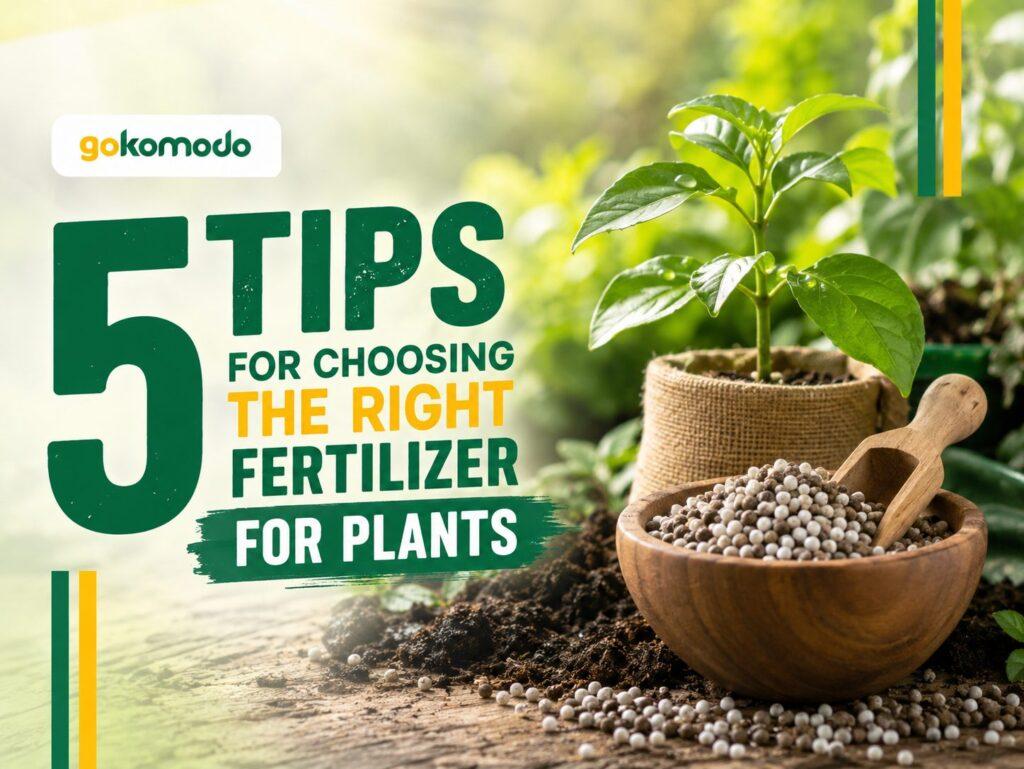
5 Tips For Choosing The Right Fertilizer For Plants



Taking care of plants is not just about watering them every day. To help plants grow healthy, lush, and produce beautiful flowers or quality fruits, choosing the right fertilizer is also important. Unfortunately, many people still choose fertilizer based only on the brand, price, or recommendations from others without understanding what their plants actually need.
In fact, using the right fertilizer can support plant growth, strengthen roots, and improve the quality of flowers and fruits. To help you choose the right fertilizer, here are five simple tips you can follow.
Understand the Type of Plant You Want to Fertilize
Every plant has different nutritional needs. Leafy ornamental plants generally need more nitrogen to encourage healthy, green, and fuller leaves. Meanwhile, flowering and fruiting plants need nutrients such as phosphorus and potassium to support flower and fruit development. That is why it is important to identify the type of plant before buying fertilizer. By understanding what your plants need, you can choose fertilizer more accurately and support better plant growth.
Pay Attention to the Nutrient Content
When buying fertilizer, do not focus only on the price or packaging. You should also check the nutrients contained in the fertilizer. Most fertilizers contain three main nutrients: nitrogen (N), phosphorus (P), and potassium (K). Nitrogen helps support the growth of leaves and stems. Phosphorus supports root development and flowering, while potassium helps improve plant strength and resistance to various stresses.
These nutrients are usually listed on the fertilizer packaging. For example, NPK 16-16-16 indicates that the fertilizer contains nitrogen, phosphorus, and potassium in a balanced ratio. To learn more about how to choose the right fertilizer, you can also read this guide to choosing the right fertilizer for your plants.
Choose Organic or Inorganic Fertilizer Based on Your Needs
Organic and inorganic fertilizers each have their own advantages. Organic fertilizers, such as compost and manure, can help improve soil structure and maintain soil fertility over time.
Meanwhile, inorganic fertilizers can provide nutrients to plants more quickly and in specific amounts. In many cases, farmers and plant enthusiasts use both types of fertilizer. Organic fertilizer can help maintain soil quality, while inorganic fertilizer can help meet the plant’s specific nutrient needs. The key is to use fertilizer properly and according to the needs of the plants and soil.
Adjust Fertilizer to the Plant’s Growth Stage
Plants need different nutrients at different stages of growth. Therefore, fertilizer should also be adjusted according to the plant’s growth stage. During the early growth stage, plants generally need more nitrogen to support the development of leaves and stems. As the plant grows, it needs a more balanced supply of nitrogen, phosphorus, and potassium.
During the flowering and fruiting stages, phosphorus and potassium become particularly important to support flower and fruit development. Using the right fertilizer at the right stage can help plants grow more effectively and produce better results.
Avoid Fake or Low-Quality Fertilizer
Choosing quality fertilizer is important to ensure that plants receive the nutrients they need. There are still fake or low-quality fertilizers on the market that may not contain the nutrients stated on the packaging. If used continuously, these products may not provide the expected results and can potentially affect plant growth.
To stay safe, buy fertilizer from trusted agricultural stores and always check the product packaging before purchasing. Pay attention to important information such as the product name, nutrient content, registration or distribution information, expiration date, and the overall condition of the packaging.Be careful with products sold at prices that are far below the normal market price, especially if the product information is unclear.
Choose the Right Fertilizer for Healthier Plants
Choosing the right fertilizer does not have to be difficult. By understanding your plant type, checking the nutrient content, choosing between organic and inorganic fertilizer based on your needs, adjusting fertilizer to the plant’s growth stage, and avoiding fake or low-quality products, you can provide better nutrition for your plants.
Proper fertilizer use can help plants grow healthier, stronger, and more productive while also supporting good soil quality in the long term. Want to learn more about choosing quality fertilizer? You can also read our article about the criteria for good and safe fertilizer for different types of plants. For more useful information, tips, and insights about agriculture, stay updated with the latest articles on the Gokomodo website.